





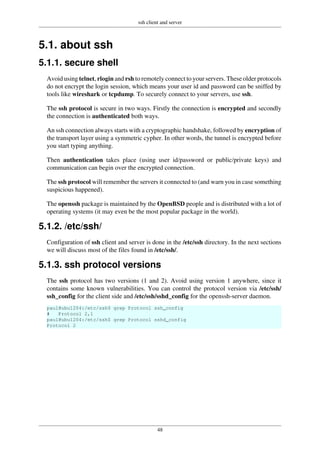
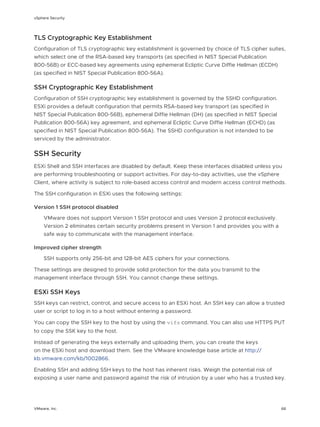
The ciphers for ssh are configured in the /etc/ssh/sshd_config file so you will want to disable the deprecated ciphers by modifying traces in the sshd_config file. During safety scans, one of many security vulnerabilities that can be found is deprecated SSH cryptographic settings. The SSH protocol (Secure Shell) is a method for securing remote login from one laptop to another however the target may be utilizing deprecated SSH cryptographic settings to speak. You can use the crypto_policies RHEL system function to configure the FUTURE cryptographic policy in your managed nodes. The NO-SHA1 policy module disables the SHA-1 hash perform solely in signatures and never elsewhere.
Install And Configure Snmp On Centos Eight
- It is a conservative security degree that’s believed to withstand any near-term future assaults.
- This secret is then used to create the encryption and authentication keys that defend the SSH session.
- You may need already hardened your SSH configuration by disabling weak algorithms directly in /etc/ssh/sshd_config.
- This ensures the SSH daemon picks up the updated cryptographic settings from the new coverage.
Key Trade (KEX) is step one in setting up an SSH connection. It permits the client and server to securely agree on a shared secret key without ever sending the key over the network. The /etc/crypto-policies/state/CURRENT.pol file lists all settings in the at present utilized system-wide cryptographic coverage after wildcard growth.
Disable Weak Algorithms Through Custom Crypto-policy Module
You can find additional details about cryptographic policies and lined applications within the crypto-policies(7) man page in your system. One way to study which algorithm was chosen is to add the -v parameter to the ssh client. It’s not the objective of this documentation to repeat the wonderful upstream documentation (see the References part at the end of this page). As A Substitute, we are going to present the configuration options, and some examples of how to use them. Please have a look at tell us what configuration modifications we are ready to make to get rid of this vulnerability.
Switching to the LEGACY coverage degree results in a much less secure system and purposes. To work round this problem, use the DEFAULT cryptographic policy while connecting to the Buyer Portal API. Alternatively, we are entitled to immediately https://darkside.ru/band/9139/ download and/or installsecurity updates regardless of your settings. In these circumstances, we willprovide you with the related data, e.g. in this securityadvisory. Move these 2 recordsdata (/etc/ssh/ssh_host_rsa_key.pub and /etc/ssh/ssh_host_rsa_key) to /tmp listing. SHA1 deprecated setting for SSH vulnerability detected on API Gateway equipment.
Nonetheless, some third-party functions, for instance, public signatures, nonetheless use SHA-1. To disable the usage of SHA-1 in signature algorithms on your system, you have to use the NO-SHA1 policy module. The default system-wide cryptographic coverage in Red Hat Enterprise Linux eight doesn’t permit communication utilizing older, insecure protocols.
Ssh Weak Message Authentication Code (hmac) Algorithms:
These ciphersuites and protocols are disabled within the DEFAULT crypto coverage stage. They can be enabled by switching the system crypto coverage stage to LEGACY. A security concern has been recognized in the Bosch MAP 5000 family ofproducts, which stems from using insecure cryptographic algorithmsin the SSH service configuration. It may expose methods to cryptographicattacks, unauthorized entry, or knowledge leakage.
Due To This Fact, to ensure weak cryptographic algorithms are literally disabled, it’s greatest practice to harden them at the crypto-policy stage. You can customize cryptographic settings used by your utility preferably by configuring supported cipher suites and protocols directly in the utility. Red Hat constantly adjusts all policy levels so that every one libraries provide secure defaults, besides when using the LEGACY policy. Even though the LEGACY profile doesn’t present safe defaults, it doesn’t embrace any algorithms which are simply exploitable.
As such, the set of enabled algorithms or acceptable key sizes in any supplied coverage could change in the course of the lifetime of Purple Hat Enterprise Linux. For the opposite stages within the ssh connection, like key trade, or public key authentication, other expressions for the grep command have to be used. This will record supported key trade algorithms, ciphers, MACs, and more. Nmap is a powerful network scanning device that can be used to enumerate the SSH algorithms supported by a server using the ssh2-enum-algos script. This demonstrates that whereas weak algorithms can be found as fallback options, the SSH implementation correctly prioritizes safe modern algorithms when each shopper and server support them.
Whereas in the past we didn’t disable algorithms in a consistent method (different functions utilized totally different policies), right now we now have a system-wide policy which is followed by all RHEL crypto core elements. These insurance policies allow us to persistently deal with and deprecate algorithms system-wide. Selections about coverage contents are based mostly on paperwork like RFC 7457 which provides a listing of assaults taking benefit of legacy crypto algorithms. You can even remove a symlink associated to your software from the /etc/crypto-policies/back-ends directory and exchange it with your custom-made cryptographic settings. This configuration prevents the use of system-wide cryptographic insurance policies for applications that use the excluded again finish. These ciphersuites and protocols can be found however disabled in all crypto coverage ranges.